Śri Puruṣottama Saṁsmṛti -
Satya Śiva Sundarākṛti


Celebrating the Centenary of
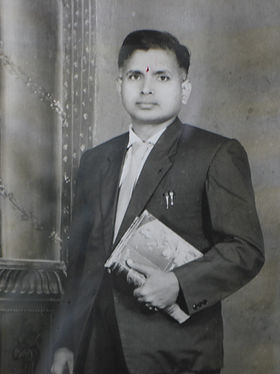
Acharya Boddupalli Purushottam
Acharya Boddupalli Purushottam was a visionary scholar, a dedicated teacher, and a profound mentor whose life beautifully embodied the eternal ideals of Satyaṁ (Truth), Śivaṁ (Bliss), and Sundaraṁ (Beauty).
Born the youngest child into the humble family of a primary school teacher, his path was defined by sheer determination. He began his professional journey as a modest clerk, yet through an unwavering, lifelong commitment to knowledge, he rose to the prestigious rank of a renowned National Professor. This remarkable ascent was anchored by the values passed down by his father and shaped by legendary mentors like Kalaprapurna Tummala Seetharama Murthy.
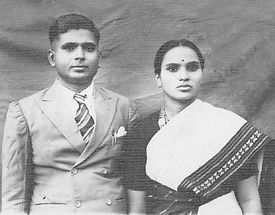
Alongside his devoted wife, Hanumayamma, he weathered life’s storms to build "Vidyālankār"; a sanctuary of education, warmth, and refuge for family, friends, and students alike. From this bedrock of love and stability, Acharya Purushottam authored over 30 seminal books and inspired generations of minds. Affectionately revered as the "Upanyasa Kesari" (The Oratorical Lion), his formidable intellectual insight was always beautifully balanced by a quick wit and boundless kindness.
As we mark his Centenary in 2026, this site stands as a living tribute to his enduring legacy. We invite you to explore his extraordinary journey, his literary masterpieces, and the timeless memories of a man who lived in knowledge, for knowledge, and lived to share it with the world.
About the Title
Ancient Roots: East and West
The ancient Vedic hymns have long made extensive use of the terms Satyaṁ, Śivaṁ, and Sundaraṁ, though they do not appear to have been grouped together as a distinct triad.
In Western philosophy, Plato (c. 427–347 BCE) used the Greek terms Alētheia (Truth), Agathon (Goodness), and Kalon (Beauty) to describe Mother Nature and the Ultimate Reality. While Plato explored these concepts independently, later philosophers such as Plotinus and Proclus were among the first to unify them into a philosophical triad. During the Middle Ages, this trinity formally appeared in published texts under the Latin phrase Verum, Bonum, Pulchrum, which Catholic philosophers frequently used to describe the Divine.
Literary and Spiritual Legacy in India
To the best of our knowledge, the first book specifically titled Satyaṁ Śivaṁ Sundaraṁ was written by the highly influential Telugu writer and philosopher Sri Gudipati Venkatachalam (popularly known as "Chalam"). Published in 1921, Chalam’s work was a collection of three stories, each exploring one of the title's concepts, designed to critique the orthodox societal norms of the time, particularly regarding women's rights and marital freedom.
Decades later, in 1960, the title was chosen by Prof. N. Kasturi, the dedicated translator of Bhagawan Sri Sathya Sai Baba’s works, for a biography covering the first thirty-four years of Bhagawan’s life. However, long before the book's publication, Bhagawan frequently invoked these sacred terms in His own discourses. One notable verse, which He often sang before speaking, beautifully captures this essence:
Sarvarūpa dharaṁ Śantaṁ, Sarvanāma dharaṃ Śivaṁ |
Sacci-dānanda-rūpa-madvaitaṁ, Satyaṁ Śivaṁ Sundaraṁ ||
"The embodiment of all names and forms in peace and auspiciousness; Being-Awareness-Bliss is non-dual and is Truth, Goodness, and Beauty."
Coincidentally, 2025–2026 marks the Centennial Year of both Bhagawan Sri Sathya Sai Baba (November 23, 1926) and Acharya Boddupalli Purushottam (July 22, 1926). Both shared a deep spiritual affinity for this triad. One of the 108 names for Bhagawan is:
Oṁ Śrī Sāyi Puruṣottamāya Namaḥ!
A befitting Title for Centennial Tribute
Acharya Purushottam was also exceptionally fond of the concepts of Satyaṁ Śivam Sundaraṁ weaving them frequently into his own poems and discourses. This deep passion found expression in his 1969 poetic work, Satyaṁ Śivaṁ Sundaraṁ; which he also rendered in English as "Truth, Bliss, and Beauty". Clarifying why he used the word Bliss for translation of Śivaṁ, Acharya says in the foreword, "The word Bliss meaning celestial joy, may not be synonymous with the term Sivam, which means the auspicious. Yet I prefer the word Bliss, not only because it is in harmony with the other two words Truth and Beauty, but also because it is a sort of metonymy, since Sivam is the cause, and Bliss, the effect."
Starting with these publications, all his subsequent books were released under the banner of Girija Prachuranalu, whose official logo proudly bears these words as a lasting testament to his affinity for them.
Therefore, it is a deeply befitting title for this Centennial Tribute: